
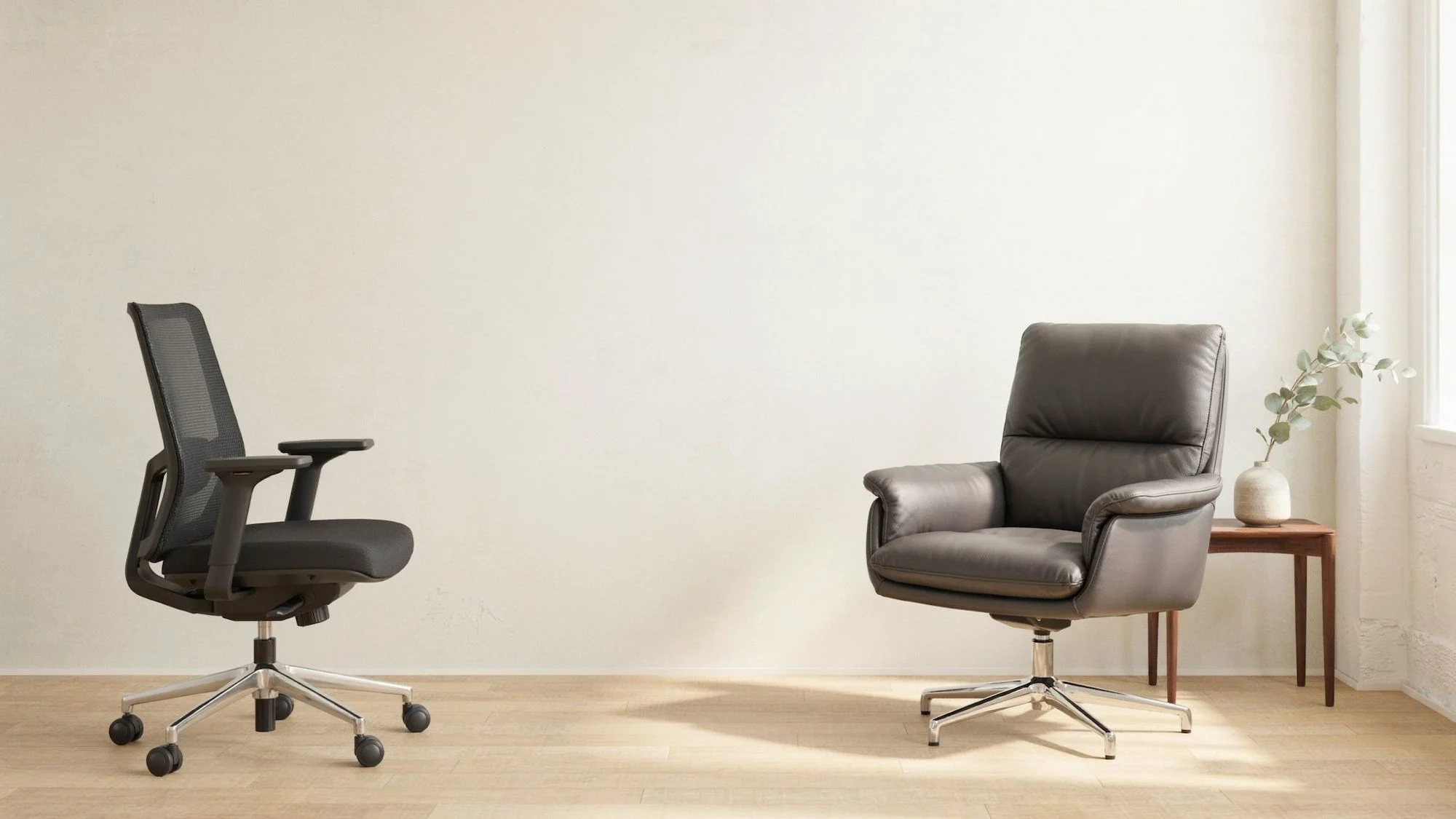
Office seating rarely gets as much thought as desks or storage, yet it shapes how comfortable a workday feels. Task chairs and executive chairs are two of the most common options in offices today. Both are built for workplace use, but they differ in design, functionality, comfort, size, and intended use. The right choice depends on the employee’s daily tasks, working hours, workspace, and ergonomic requirements. This comparison of task chairs vs executive chairs looks at where each type fits, so businesses can make a practical decision instead of choosing by appearance or job title.
What Is a Task Chair?
A task chair is a seat designed for everyday desk and computer-based work. Its main purpose is to support an employee through long stretches of typing, calls, and screen time while allowing easy movement. Common features include adjustable seat height, back support, armrests, casters, and swivel functionality, and many ergonomic office chairs in this category add a mesh back for airflow. Thanks to its compact design, a task chair fits neatly into individual workstations and open-plan offices, where employees often turn, roll, or reach for files throughout the day. That flexibility is why it is the default choice for most teams.
What Is an Executive Chair?
An executive chair is a larger, more substantial seat, usually chosen for senior roles. Unlike a standard task chair, it typically has a high backrest, a wider seat, extra cushioning, and premium upholstery such as leather or high-grade fabric. You will find it in managerial cabins, boardrooms, and other formal workspaces, where comfort and appearance both matter. The emphasis is on a more substantial presence and a relaxed seating experience. That said, an executive chair is not only about looks. Many models include ergonomic features and adjustable settings such as tilt, recline, and height control.
Task Chairs vs Executive Chairs: Key Differences
Task chairs and executive chairs differ across seven practical factors, from design and space requirements to adjustability, comfort, mobility, materials, and price. Each one plays a different role depending on how long someone sits, how often they move, and what the space around the desk can actually hold.
Design and Appearance
A task chair keeps things minimal and functional, built to disappear into a workstation rather than dominate it. An executive chair does the opposite, leaning into a bolder, more formal design meant to suit cabins and client-facing spaces.
Size and Space Requirements
Squeeze a task chair into a tight workstation, and it fits without a fuss, thanks to its compact frame. An executive chair asks for more, needing extra floor space and clearance around the desk to sit comfortably.
Ergonomic Adjustability
Task chairs usually come with a wider range of adjustments: height, tilt, and lumbar, built for people who shift position constantly through the day. That range matters less in roles where sitting stays fairly still for long stretches.
Comfort and Cushioning
Executive chairs lean on thicker padding and a taller backrest to carry someone through long, seated hours. Instead, task chairs go lean, balancing support with a more structural seat, rather than piling on the cushioning.
Mobility and Flexibility
Task chairs roll easily from workstation to desk due to lighter frames and smaller casters. Executive chairs have additional weight, which improves them to be suited to stay in one place.
Materials and Finish
Mesh and fabric show up most often on task chairs, chosen mainly for breathability during long hours of movement. Executive models lean toward leather and leatherette instead, aiming for a finish that reads as premium.
Price and Value
Task chairs are an economical option to equip a complete floor, often being less expensive to purchase upfront. Executive chairs sit at a higher price point, tied directly to the materials and build quality that go into them.
Which Chair Is Better for Different Work Environments?
Task chairs generally suit open workstations and individual desks, while executive chairs are often better suited to private cabins and formal meeting spaces. For home offices, the choice depends on available space, working hours, and the way the chair will be used.
Open Plan and Individual Workstations
Most open-plan desks work best with task chairs, since their compact size and adjustability suit shared layouts and varied body types. Teams that move between calls, screens, and quick huddles benefit from a seat built around frequent repositioning.
Managerial and Executive Offices
Private cabins and manager desks often call for an executive chair, particularly where the role involves long stretches of meetings or client interaction. The added presence and cushioning suit a space meant to reflect seniority as well as comfort.
Meeting and Boardroom Spaces
Executive chairs are usually used in a matching set in boardrooms because visual uniformity is important in a room designed for executives and guests. Matching chairs around the table give the room a more cohesive, intentional feel.
Home Offices
Home offices depend on how the space gets used rather than any fixed rule. A compact task chair suits daily, active work, while an executive chair fits a dedicated office room where comfort and appearance both matter.
Learn more about: The Ultimate Office Chair Buying Checklist: 15 Things to Check Before You Buy
How to Choose Between a Task Chair and an Executive Chair?
Choose between a task chair and an executive chair by matching the seating to your work, available space, ergonomic needs, materials, durability, design, and budget. The best option is the one that meets your requirements without paying for unnecessary features.
- Working Hours: The longer someone sits each day, the more ergonomic adjustments matter, whatever chair they end up in.
- Type of Work: Task chairs tend to suit active, screen-heavy roles, while meeting-heavy roles often lean toward executive seating.
- Space: Let your floor space decide the frame size. Compact task chairs work well in tighter spots, while executive chairs need more room to breathe.
- Ergonomics: Adjustable lumbar support, seat depth, and armrests matter in either chair type, since comfort in ergonomic office chairs depends on fit, not category.
- Materials and Durability: Consider breathability, ease of cleaning, and how much daily use it can withstand.
- Design and Budget: Choose a chair that fits the room and your budget, rather than spending for things you don’t really need.
Read more: Types of Office Chairs: A Complete Guide to Choosing the Right One for Your Workspace
Choosing the Right Office Chair with Benchy
Choosing between task chairs and executive chairs becomes easier when you consider the user’s needs alongside the workspace layout. At Benchy, we design and manufacture customised office furniture for businesses in Kerala and Bengaluru, with a focus on comfort, durability, and different workspace requirements.
Beyond office chairs, Benchy offers workstations, desks, storage solutions, meeting room furniture, and cafeteria furniture to help businesses create functional and consistent office interiors. Whether you are furnishing a new office or upgrading an existing workspace, explore Benchy’s task chairs, executive chairs, and customised office furniture to find options that suit your space and how your team works.


