
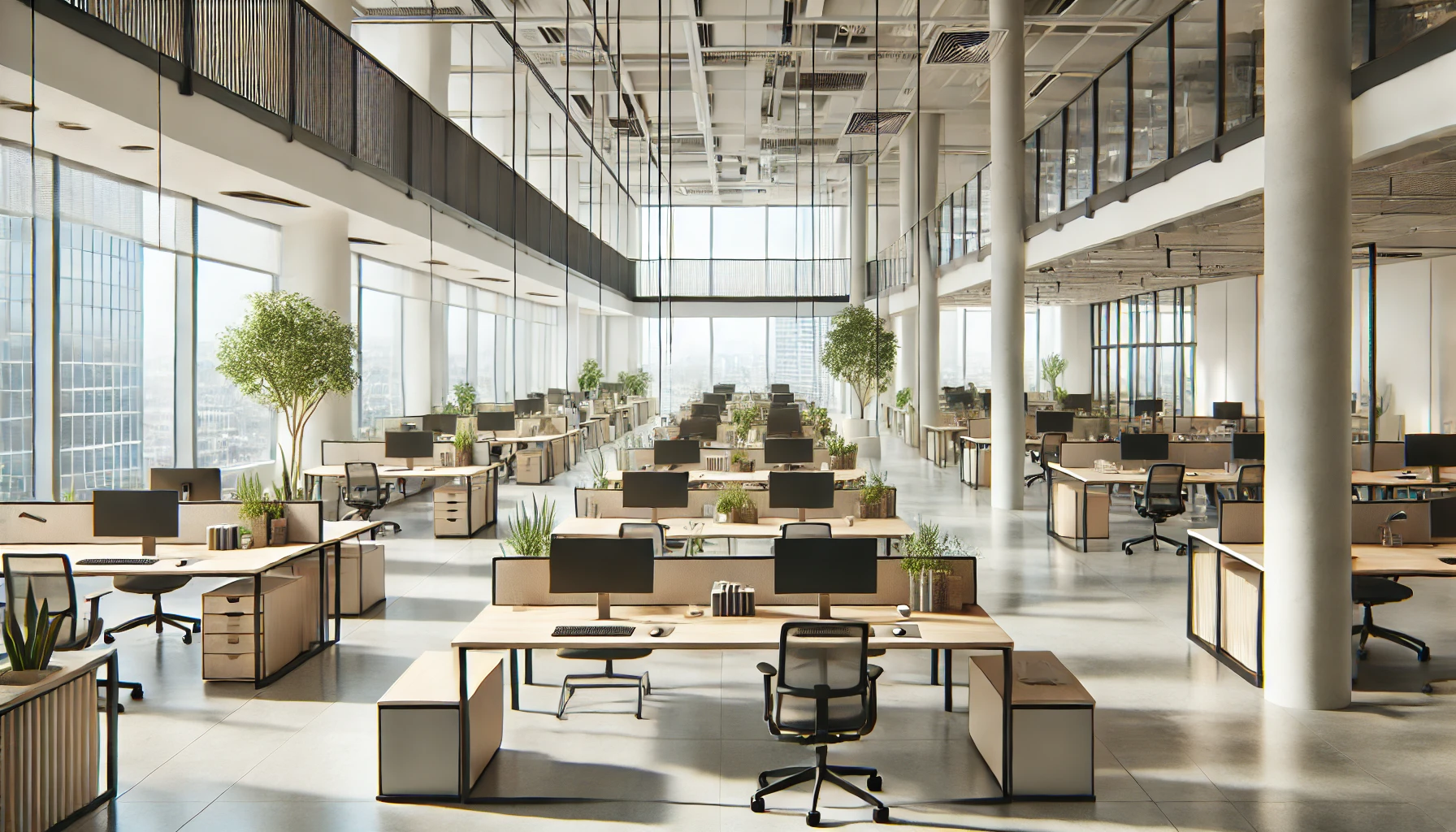
Gone are the days of cubicles and walled-off offices. Today’s organizations embrace flexible workspaces, favoring openness, agility, and collaboration. But with this shift comes a new challenge: how do you define zones in an open plan without walls? Surprisingly, one powerful answer lies in an everyday object— tables.
Tables aren’t just places to sit and work — they can act as spatial anchors, quietly creating boundaries, guiding movement, and enabling different work modes in shared environments. Let’s explore how smart table design and placement help create order in the fluid chaos of modern workspaces.
The Rise of the Flexible Workspace
The modern workspace has undergone a transformation fueled by trends like remote work, activity-based working, and a growing emphasis on employee well-being. As walls came down, open offices emerged—but not without their own set of challenges.
Among the biggest issues? Lack of structure. Open plans can lead to distraction, noise, and a feeling of being unmoored. That’s where zoning strategies come in, and why tables play a vital role.
What Does “Tables as Zones” Mean?
The idea is simple but profound: using tables not just for function, but as deliberate tools of spatial organization. A table’s size, shape, material, and placement can define a zone without building walls.
They help:
✔ Segment space into distinct areas (focus, collaboration, social, etc.)
✔ Guide movement and flow through a workspace
✔ Signal purpose through visual and functional cues
Spatial Anchors: How Tables Shape Behavior
Tables are among the most flexible tools in open office layout design. Here’s how they serve as spatial anchors:
1. Creating Zones Without Walls
Large communal tables can create an ideation zone where teams gather for brainstorming. A small round table might signify an informal huddle area, while high tables near windows can act as impromptu breakout zones.
This zoning helps people understand what kind of behavior is expected in each area—without any signage or barriers.
2. Encouraging the Right Work Mode
Just like lighting and acoustics, tables can set the tone for a space. Want to encourage deep focus? Opt for a single-person desk with partitioned seating. Looking to spark conversation? Choose a shared round table in a more visible location.
This subtle guidance is key in activity-based working (ABW) models, where employees shift between different types of spaces throughout the day.
3. Promoting Natural Flow
Tables can also guide foot traffic and circulation patterns. Arranged thoughtfully, they become flow-friendly boundaries—steering people intuitively through zones while maintaining visual openness.
Design Considerations for Table-Based Zoning
If you’re planning to use tables as zoning tools, consider the following elements:
| Design Element | Impact on Zoning |
| Shape & Size | Round = collaboration; Long = team tasks; Small = focus |
| Height | Standing tables = active, short-term use; Low = relaxation |
| Material & Finish | Wood = warmth; Metal = modern; Glass = transparency |
| Color | Bright = energy; Neutral = calm |
| Add-ons | Screens, planters, or power outlets add function & privacy |
Each choice affects how people use and interpret a space.
Benefits of Table-Based Zoning
Using tables as spatial cues delivers more than aesthetic appeal—it supports productivity, autonomy, and spatial clarity.
🧠 Cognitive ease: Clear zones reduce mental fatigue by signaling the space’s intent.
👥 Behavioral cues: Tables nudge users toward certain behaviors (focus vs. talk).
🔄 Adaptability: Easily reconfigurable zones support evolving team needs.
💸 Cost-effective: Far cheaper than construction or custom partitioning.
Common Mistakes to Avoid
✖ Using the same table type everywhere, which flattens the spatial hierarchy.
✖ Ignoring adjacencies — loud zones placed next to quiet ones.
✖ Overcrowding tables, which eliminates flow and defeats the purpose.
Proper planning with space utilization metrics is crucial.
Tables as Silent Designers
When thoughtfully selected and strategically placed, tables become more than furniture—they’re tools of transformation in the flexible office. As open-plan trends evolve, using tables as zones helps balance freedom with function, giving teams clarity, purpose, and creative energy.
Checkout Benchy’s workstation tables for your space 👉 benchy.in


